Available Questions 850 found Page 25 of 43
Standalone Questions
#1258
Mathematics
Linear Programming
SA
REMEMBER
2024
AISSCE(Board Exam)
KNOWLEDGE
3 Marks
Solve the following linear programming problem graphically: Maximise $z=4x+3y.$ subject to the constraints $x+y\le800$, $2x+y\le1000$, $x\le400$, $x,y\ge0$.
Key:
Sol:
Sol:
#1257
Mathematics
Definite Integrals
SA
UNDERSTAND
2024
AISSCE(Board Exam)
KNOWLEDGE
3 Marks
Evaluate: $\int_{0}^{\pi/4}\frac{1}{sin~x+cos~x}dx$
Key:
Sol:
Sol:
#1256
Mathematics
Integrals
SA
UNDERSTAND
2024
AISSCE(Board Exam)
KNOWLEDGE
3 Marks
Find: $\int\frac{2+sin~2x}{1+cos~2x}e^{x}dx$
Key:
Sol:
Sol:
#1255
Mathematics
Integrals
SA
UNDERSTAND
2024
AISSCE(Board Exam)
KNOWLEDGE
3 Marks
Find: $\int\frac{x^{2}+1}{(x^{2}+2)(x^{2}+4)}dx$
Key:
Sol:
Sol:
#1254
Mathematics
Applications of Derivatives
SA
REMEMBER
2024
AISSCE(Board Exam)
KNOWLEDGE
3 Marks
Find the absolute maximum and absolute minimum values of the function f given by $f(x)=\frac{x}{2}+\frac{2}{x}$ , on the interval [1, 2].
Key:
Sol:
Sol:
#1253
Mathematics
Applications of Derivatives
SA
APPLY
2024
AISSCE(Board Exam)
KNOWLEDGE
3 Marks
Find the intervals in which the function $f(x)=\frac{log~x}{x}$ is strictly increasing or strictly decreasing.
Key:
Sol:
Sol:
#1252
Mathematics
Continuity and Differentiability
SA
REMEMBER
2024
AISSCE(Board Exam)
KNOWLEDGE
3 Marks
Find the value of a and b so that function f defined as : $$ f(x) = \begin{cases} \frac{x-2}{|x-2|} + a, & \text{if } x < 2 \\ a+b, & \text{if } x = 2 \\ \frac{x-2}{|x-2|} + b, & \text{if } x > 2 \end{cases} $$ is a continuous function.
Key:
Sol:
Sol:
#1251
Mathematics
Derivatives
SA
UNDERSTAND
2024
AISSCE(Board Exam)
KNOWLEDGE
3 Marks
If $x~cos(p+y)+cos~p~sin(p+y)=0$ prove that $cos~p\frac{dy}{dx}=-cos^{2}(p+y),$ where p is a constant.
Key:
Sol:
Sol:
#1250
Mathematics
Vector Algebra
VSA
REMEMBER
2024
AISSCE(Board Exam)
KNOWLEDGE
2 Marks
Let $\vec{a}$ and $\vec{b}$ be two non-zero vectors. Prove that $|\vec{a}\times\vec{b}|\le|\vec{a}||\vec{b}|$ . State the condition under which equality holds, i.e., $|\vec{a}\times\vec{b}|=|\vec{a}||\vec{b}|$
Key:
Sol:
Sol:
#1249
Mathematics
Vector Algebra
VSA
REMEMBER
2024
AISSCE(Board Exam)
KNOWLEDGE
2 Marks
Find the position vector of point C which divides the line segment joining points A and B having position vectors $\hat{i}+2\hat{j}-\hat{k}$ and $-\hat{i}+\hat{j}+\hat{k}$ respectively in the ratio $4:1$ externally. Further, find $|\vec{AB}|:|\vec{BC}|$ .
Key:
Sol:
Sol:
#1248
Mathematics
Integrals
VSA
UNDERSTAND
2024
AISSCE(Board Exam)
KNOWLEDGE
2 Marks
Given $\frac{d}{dx}F(x)=\frac{1}{\sqrt{2x-x^{2}}}$ and $F(1)=0$, find $F(x)$.
Key:
Sol:
Sol:
#1247
Mathematics
Definite Integrals
VSA
UNDERSTAND
2024
AISSCE(Board Exam)
KNOWLEDGE
2 Marks
Evaluate: $\int_{0}^{\pi/2}sin~2x~cos~3x~dx$
Key:
Sol:
Sol:
#1246
Mathematics
Continuity and Differentiability
VSA
REMEMBER
2024
AISSCE(Board Exam)
KNOWLEDGE
2 Marks
Check the differentiability of $f(x)=\begin{cases}x^{2}+1,&0\le x<1\\ 3-x,&1\le x\le2\end{cases}$ at $x=1.$
Key:
Sol:
Sol:
#1245
Mathematics
Derivatives
VSA
UNDERSTAND
2024
AISSCE(Board Exam)
KNOWLEDGE
2 Marks
If $x=e^{x/y}$, prove that $\frac{dy}{dx}=\frac{log~x-1}{(log~x)^{2}}$
Key:
Sol:
Sol:
#1244
Mathematics
Inverse Trigonometric Functions
VSA
APPLY
2024
AISSCE(Board Exam)
KNOWLEDGE
2 Marks
Evaluate : $\sec^{2}(\tan^{-1}\frac{1}{2})+cosec ^{2}(\cot^{-1}\frac{1}{3})$
Key:
Sol:
Sol:
#985
Physics
Nuclei
VSA
APPLY
2025
KNOWLEDGE
2 Marks
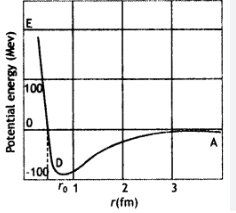 State two important properties of the nuclear force.
Key:
Sol:
Sol:
hkdcdj ds
#982
Physics
Alternating Current
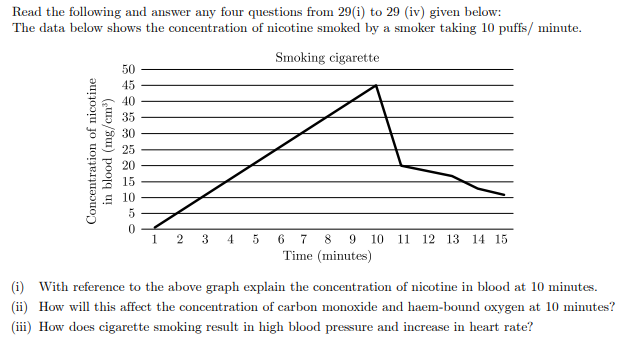 graph plot and analyze
#977
Mathematics
Relations and Functions
ASSERTION_REASON
REMEMBER
2025
AISSCE(Board Exam)
KNOWLEDGE
1 Marks
Assertion (A): Let $f(x) = e^{x}$ and $g(x) = \log x$. Then $(f + g)x = e^{x} + \log x$ where domain of $(f + g)$ is $\mathbb{R}$.
Reason (R): $\text{Dom}(f + g) = \text{Dom}(f) \cap \text{Dom}(g)$.
Key: D
Sol:
Sol:
#976
Mathematics
Vector Algebra
ASSERTION_REASON
APPLY
2025
AISSCE(Board Exam)
Competency
1 Marks
Assertion (A) : If $|\vec{a} \times \vec{b}|^{2}+|\vec{a} \cdot \vec{b}|^{2}=256$ and $|\vec{b}|=8$, then $|\vec{a}|=2$.
Reason (R) : $\sin ^{2} \theta+\cos ^{2} \theta=1$ and $|\vec{a} \times \vec{b}|=|\vec{a}||\vec{b}| \sin \theta$ and $\vec{a} \cdot \vec{b}=|\vec{a}||\vec{b}| \cos \theta$.
Key: A
Sol:
Sol:
#975
Mathematics
Inverse Trigonometric Functions
ASSERTION_REASON
APPLY
2025
AISSCE(Board Exam)
Competency
1 Marks
Assertion (A) : Set of values of $\sec^{-1}\left(\frac{\sqrt{3}}{2}\right)$ is a null set.
Reason (R) : $\sec^{-1}$ x is defined for $x \in \mathbb{R}-(-1, 1)$.
Key: A
Sol:
Sol: